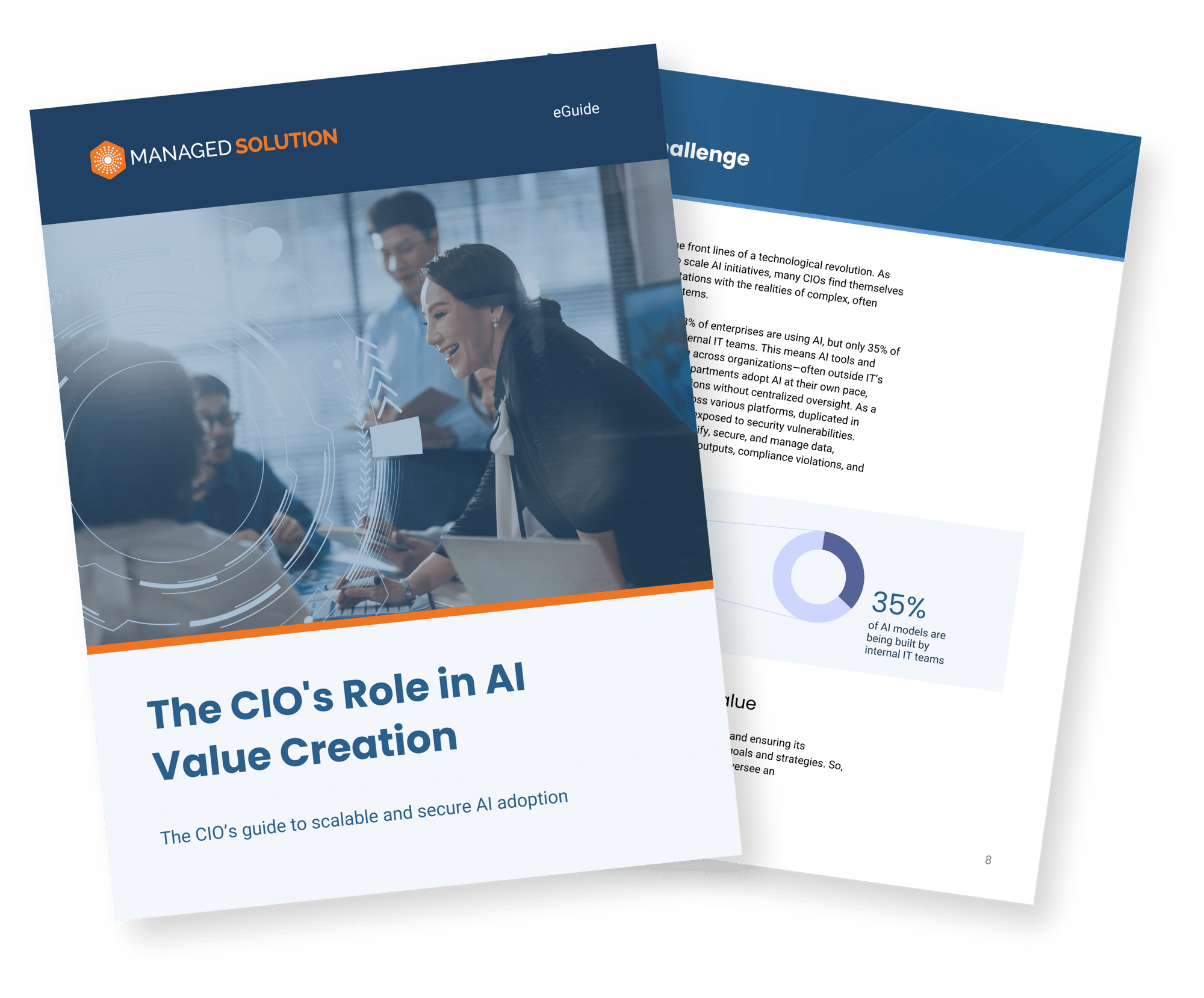
Achieve scalable and secure AI adoption with our easy-to-follow guide. Download today to understand the CIO's role in AI value creation and the best practices for everything AI.
1 Your satisfaction is our top priority! ⭐️
2 Your feedback fuels our passion! Thank you! 🙌
3 Proud to serve such wonderful customers! 💖
What’s Inside our eGuide?
Chapter 1: Introduction
Understand AI’s potential, the challenges CIOs face and how a clear strategy can drive scalable success.
Chapter 2: What CIOs Need to Know (and What to Ignore)
Let's review what is real and what is hype when it comes to AI:
AI runs on data
The hype is real
It's more than just automation
Chapter 3: The Challenge
Understand the barriers to AI adoption and how to navigate them:
Talent and skills gap
Data quality and infrastructure limitations
Lack of AI strategy
Chapter 4: The Roadmap Forward
A step-by-step framework for scalable and secure AI adoption:
Developing a clear AI strategy
Building the right team and tools
Measuring and scaling success
Chapter 5: Conclusion
Get ready to turn strategy into action with expert guidance:
Identifying your first use cases
Assess data readiness
Partner with a technology expert for long-term success
FAQs
What are CIOs responsible for?
In short, they oversee an organization's AI strategy framework.
What does a CIO worry about?
CIOs worry about challenges like managing digital transformation, cybersecurity, aligning IT with business goals, and ensuring scalability and innovation.
What are the risks of a CIO?
The risks of a CIO include cybersecurity threats, data privacy breaches, system downtime and failure to align IT with business needs.
What is the primary responsibility of a CIO?
The primary responsibility of a CIO is to oversee and execute the organization's IT strategy, manage infrastructure and ensure systems align with business objectives.